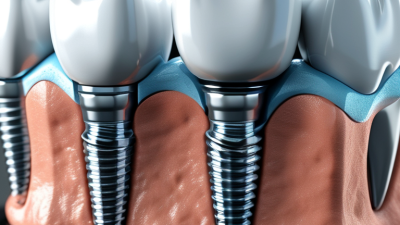
China has become an important sourcing base for medical implant manufacturers, but global buyers need more than attractive pricing. This guide examines China’s Implant Innovation suppliers through practical, evidence-based criteria. It considers product engineering, material selection, quality systems, production capacity, and international communication.
The strongest suppliers usually provide traceable materials, documented testing, and clear technical specifications. Buyers should review certifications, registration status, inspection records, and clinical or application evidence relevant to each market. Factory visits can reveal details that websites hide, such as cleanroom discipline, batch labeling, packaging controls, and operator training. Small details matter.
Experience also changes the evaluation process. A supplier may produce orthopedic, dental, or spinal implants efficiently, yet lack experience with a buyer’s regulatory pathway. Product compatibility, sterilization methods, shelf-life data, and post-market support deserve direct discussion. Independent audits and sample assessments can reduce avoidable risks. No supplier is perfect.
This overview does not treat scale as proof of reliability. A large factory may still provide weak communication or inconsistent documentation. A smaller specialist may offer stronger engineering support, but limited capacity can create delivery pressure. Buyers should compare verified capabilities, not promotional language. The goal is a balanced shortlist of dependable partners that can support safe, compliant, and repeatable implant production across global markets. Some judgments remain provisional, because supplier performance can change with new equipment, management, or regulatory requirements.
What defines an innovative implant supplier in China? It is not only a new alloy, thinner profile, or attractive prototype. Innovation must survive clinical reality. The World Health Organization reported in 2022 that about 1.71 billion people live with musculoskeletal conditions worldwide. This pressure increases demand for implants that support reliable recovery, efficient surgery, and long-term function.
A capable supplier should connect engineering with evidence. Look for ISO 13485 quality systems, controlled design changes, validated sterilization, biocompatibility testing, and complete material traceability. Technical files should explain fatigue strength, surface treatment, dimensional tolerance, and packaging performance. The OECD Health at a Glance 2023 report shows that healthcare systems continue facing cost and workforce pressures. Therefore, suppliers should demonstrate practical value, not only laboratory performance. Faster assembly and clear surgical instructions can matter greatly.
Real innovation also depends on feedback from surgeons, engineers, and patients. Site visits, sample inspections, and documented corrective actions reveal more than sales presentations. A supplier that shares test limitations may be more trustworthy than one promising perfect outcomes. I would still question any claim supported only by internal data. Even experienced manufacturers can overlook usability problems during rapid development. That is why independent testing, post-market monitoring, and transparent communication should remain part of supplier evaluation.
China’s implant manufacturing is shifting from low-cost production toward measurable engineering control. The 2024 Grand View Research report estimates the global medical 3D printing market exceeded 4 billion dollars in 2023. This growth is influencing Chinese suppliers to use electron-beam and laser powder-bed fusion for porous titanium structures. These lattices can support bone ingrowth while reducing implant weight. Tiny pores, however, require strict cleaning and inspection.
Surface engineering is another key technology. Plasma spraying, anodized coatings, and advanced polishing can improve wear resistance and biological compatibility. CNC machining still matters, especially for hip stems, spinal cages, and trauma plates. Automated optical inspection now checks thread profiles and roughness before packaging. According to the 2024 MarketsandMarkets medical device 3D printing report, the sector is expected to maintain double-digit annual growth, increasing pressure for stable process validation.
Digital traceability is becoming equally important. Production records should connect powder batches, heat treatment, machining parameters, and sterilization data. Chinese suppliers serving global buyers increasingly align quality systems with ISO 13485 and risk controls under ISO 14971. Yet technology alone is not enough. Some factories still emphasize prototype speed over long-term fatigue testing. That weakness deserves attention. Independent testing, clinical feedback, and transparent documentation remain essential when buyers compare manufacturing partners.
Representative engineering properties of biomaterials commonly used in orthopedic, dental, and trauma implants. Lower density can support lightweight designs, while elastic modulus helps engineers evaluate stiffness and stress-shielding behavior.
Representative room-temperature values: density in g/cm³ and elastic modulus in GPa. Actual values vary with alloy grade, porosity, processing route, crystallinity, and testing method.
China’s implant supply base is moving from cost competition toward engineered clinical value. Grand View Research estimated the global dental implants market at about USD 5.2 billion in 2023, with continued growth through 2030. This demand rewards suppliers with dependable manufacturing, not attractive catalogs alone.
Leading Chinese suppliers commonly focus on commercially pure titanium, titanium alloy fixtures, and surface treatments that support predictable bone contact. Many now offer roughened or sandblasted surfaces, digital prosthetic components, and customized abutments. Their strongest advantage is often production flexibility. A buyer can request multiple diameters, connection designs, and packaging formats from one facility. That saves time.
But flexibility needs evidence. Strong suppliers provide material certificates, batch traceability, dimensional inspection records, and sterilization validation. They should also maintain quality systems aligned with ISO 13485 and relevant market requirements. The World Health Organization reported that oral diseases affect nearly 3.5 billion people worldwide, creating substantial demand, but demand alone does not prove clinical performance. Some technical claims still require closer review. Independent studies, long-term follow-up data, and transparent adverse-event reporting matter more than polished product language. In my experience, supplier audits often reveal small gaps in documentation, even when machining quality looks excellent. Global buyers should assess surface consistency, packaging integrity, training support, and regulatory readiness before signing volume contracts.
For global buyers, implant innovation begins with controlled quality, not attractive prototypes. A capable Chinese supplier should maintain ISO 13485 controls across design, production, sterilization, and post-market monitoring. The ISO Survey 2023 recorded 27,917 ISO 13485 certificates worldwide. Yet certification does not prove every implant is safe.
Ask for device-specific evidence. Review material certificates, biocompatibility testing, sterilization validation, and batch-level traceability. Sample records should connect raw titanium to the final package.
Manufacturing sites should also explain nonconformity handling, complaint investigations, and corrective actions. These details reveal operational maturity better than a polished presentation.
Compliance must match the destination market. A supplier may hold ISO 13485 certification while lacking approval for a specific implant or intended use. Check technical files, clinical evidence, labeling, and authorized importer responsibilities before purchasing.
The World Health Organization reports that about one in ten patients experiences harm in healthcare, with more than half considered preventable. That figure demands disciplined verification. A certificate alone is not enough.
I would still question incomplete test summaries, unclear subcontractors, and unusually short validation timelines. Small gaps can become serious risks after implantation.
Selecting a Chinese implant supplier requires evidence beyond a polished website. Grand View Research estimated the global orthopedic implants market at over USD 50 billion in 2023, showing strong demand but also intense competition. Buyers should request the supplier’s ISO 13485 certificate, scope, audit history, and manufacturing-site address. The certificate must cover the actual implant and critical processes, not only packaging.
Ask for batch records, material certificates, sterilization validation, and traceability samples. A reliable supplier should explain how titanium alloy, cobalt-chrome, or polymer materials are inspected. The International Organization for Standardization reported more than 1.5 million ISO 13485 certificates worldwide in its 2023 survey. Certification helps, but it does not prove every production line performs consistently. Inspect recent nonconformity records and corrective actions.
Regulatory experience matters. Compare the supplier’s technical file with the destination market’s requirements, including clinical evidence, labeling, post-market surveillance, and unique-device identification. Request anonymized complaint data and a mock recall exercise. Test communication with a small, controlled order before signing a long contract. I would also visit the factory, examine cleanroom behavior, and compare incoming inspection logs with finished-product results. A low quotation can conceal weak validation or unstable subcontracting. My own review can still be biased by a confident sales presentation. Recheck every claim against dated records, independent audits, and samples from different production batches.
A practical, evidence-based supplier evaluation framework for orthopedic, dental, spinal, and other implantable medical-device projects. The assessment should be based on the specific device, intended market, risk classification, and applicable regulatory pathway.
| Evaluation Dimension | What Global Buyers Should Verify | Objective Evidence or Benchmark | Suggested Weight | Selection Signal |
|---|---|---|---|---|
| Quality Management System | Confirm whether the manufacturing site operates a controlled medical-device quality system covering design, purchasing, production, validation, complaints, nonconformity, and corrective actions. | Current ISO 13485 certificate issued by an accredited certification body; recent audit reports; documented CAPA and complaint-handling procedures; site-specific certificate scope. | 15% | High priority Prefer a certificate that covers the actual implant category and manufacturing location rather than only a trading or sales entity. |
| Regulatory Readiness | Evaluate the supplier’s ability to prepare technical documentation and support registration in the target market. | Device-specific technical files, risk-management records, clinical evaluation materials, declarations of conformity where applicable, and experience responding to authority questions. | 15% | Strong suppliers clearly distinguish between China registration, United States requirements, European Union requirements, and other national pathways. |
| Material Traceability | Check the control of implant materials, incoming inspection, heat-treatment history, lot identification, and raw-material certificates. | Material certificates with heat or batch numbers; approved-vendor lists; incoming inspection records; full traceability from raw material to finished-device lot. | 12% | Require traceability for commonly used implant materials such as titanium alloys, commercially pure titanium, cobalt-chromium alloys, stainless steel, or implant-grade polymers, as applicable. |
| Biocompatibility Program | Verify that biological safety is assessed for the finished device, including materials, surface treatments, residues, and the intended duration and location of contact. | Biological evaluation plan and report aligned with ISO 10993 principles; test reports from competent laboratories; chemical characterization where risk assessment requires it. | 10% | Do not accept a generic material certificate as a substitute for device-specific biological safety evaluation. |
| Sterilization and Packaging | Assess whether the supplier can provide a validated sterilization process and packaging system that maintains sterility through the stated shelf life. | Validated sterilization process, routine monitoring records, packaging validation, seal-strength and integrity testing, transport simulation, and shelf-life evidence. | 10% | For terminal sterilization, the validation approach should be appropriate to the chosen method, such as ethylene oxide or radiation, and supported by routine release controls. |
| Design and Engineering Capability | Review the ability to convert clinical or engineering requirements into controlled drawings, tolerances, specifications, prototypes, and design changes. | Design-history records, controlled CAD drawings, design-input and design-output records, verification and validation plans, and documented engineering-change procedures. | 10% | Prefer suppliers that can provide design-for-manufacturing feedback while preserving buyer ownership and formal approval of design changes. |
| Surface and Manufacturing Processes | Examine machining, additive manufacturing, polishing, blasting, coating, cleaning, passivation, anodizing, and other processes relevant to the implant. | Process qualifications, validated parameters, equipment-maintenance records, operator training, environmental controls, and inspection results for critical characteristics. | 10% | Critical special processes should be validated or verified before routine production and should not rely only on final inspection. |
| Testing and Metrology | Determine whether the supplier can measure dimensional, mechanical, cleanliness, surface, and functional requirements consistently. | Calibrated equipment; measurement-system records; inspection plans; test methods; laboratory competence evidence; and retained production records. | 8% | Look for objective evidence that inspection equipment is suitable for the required tolerance and that results are linked to identifiable device lots. |
| Capacity and Supply Continuity | Assess available capacity, production scalability, critical subcontractors, lead times, safety stock, and business-continuity planning. | Capacity model, production schedule, bottleneck analysis, supplier-continuity plan, dual-source strategy for critical materials where feasible, and documented lead-time assumptions. | 7% | Separate prototype capacity from validated mass-production capacity; confirm that subcontracted processes are under the supplier’s quality controls. |
| Quality Performance | Review the supplier’s actual performance rather than relying only on certificates or presentations. | On-time delivery rate, incoming-rejection rate, nonconformance rate, CAPA closure performance, complaint trends, and audit findings over a defined period. | 6% | Request time-bounded, anonymized metrics and investigate repeated deviations, late CAPA closure, or unexplained changes in performance. |
| Intellectual Property and Confidentiality | Protect drawings, specifications, surgical concepts, tooling designs, clinical information, and proprietary manufacturing methods. | Mutual non-disclosure agreement, ownership clauses, tooling ownership terms, access control, document revision control, and written restrictions on unauthorized production. | 4% | Use a signed agreement before sharing sensitive design data and define ownership of improvements, tooling, samples, and regulatory documents. |
| Communication and Technical Support | Evaluate response speed, English-language documentation, escalation procedures, and the supplier’s ability to support audits and regulatory questions. | Named quality and engineering contacts, response-time commitments, structured meeting records, change-notification process, and audit-support availability. | 3% | Choose a supplier that communicates documented facts, identifies risks early, and provides a clear path for technical escalation. |
Recommended decision rule: Shortlist suppliers that achieve at least 80 out of 100 points, have no unresolved critical regulatory or traceability gaps, pass a document review and remote or on-site audit, and successfully complete representative samples, verification testing, and a controlled pilot order. Certification status and regulatory suitability should always be confirmed directly with the relevant issuing body or authority.