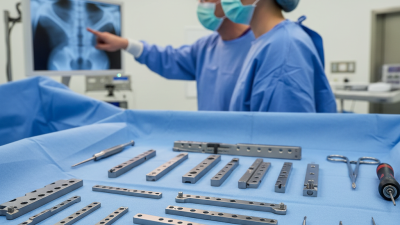
| Patient-specific implants |
CT-based three-dimensional planning, porous structures, and additive manufacturing |
Complex bone loss, revision arthroplasty, tumor reconstruction, and limb-salvage procedures |
Clinical use with active evaluation |
Do custom geometries improve fixation, reduce revision risk, and provide better long-term functional outcomes than standard implants? |
| Patient-specific instrumentation |
Preoperative imaging, digital templating, and customized surgical guides |
Total knee and hip arthroplasty, deformity correction, and complex osteotomies |
Mixed comparative evidence |
Which patient groups gain clinically meaningful benefits rather than only improved planning accuracy? |
| AI-assisted precision planning |
Machine-learning image segmentation, automated measurements, and outcome prediction |
Fracture classification, alignment planning, implant sizing, and risk stratification |
Rapidly growing; prospective validation needed |
Can algorithms remain accurate across different hospitals, imaging protocols, ages, and ethnic populations? |
| Robotic and image-guided surgery |
Navigation, intraoperative imaging, robotic assistance, and closed-loop alignment feedback |
Knee and hip replacement, spine surgery, and minimally invasive procedures |
Established technology; outcome debate continues |
Does greater technical precision consistently translate into fewer complications, revisions, or poorer patient-reported outcomes? |
| Biomaterial and surface engineering |
Porous metals, bioactive coatings, nanostructured surfaces, and low-wear materials |
Improved bone ingrowth, implant fixation, and reduction of wear-related failure |
Strong preclinical basis; long-term data developing |
Which surface characteristics provide durable osseointegration without increasing inflammatory or mechanical risks? |
| Patient-specific biomechanics |
Finite-element analysis, musculoskeletal modeling, gait analysis, and digital twins |
Implant sizing, load distribution, rehabilitation planning, and failure-risk prediction |
Translational research |
Can individualized biomechanical models predict pain, loosening, instability, or return to activity at the patient level? |
| Biologic and regenerative orthopedics |
Cell-based approaches, growth-factor research, tissue engineering, and scaffold design |
Cartilage repair, delayed union, tendon healing, and bone regeneration |
Early to intermediate clinical evidence |
Which biologic interventions have reproducible benefits, standardized preparation, and acceptable safety profiles? |
| Remote monitoring and digital rehabilitation |
Wearable sensors, smartphone assessments, tele-rehabilitation, and patient-reported outcomes |
Postoperative mobility tracking, adherence monitoring, early detection of complications, and home-based recovery |
Growing clinical evidence |
Which digital measures are reliable, clinically actionable, and accessible to patients with limited technology access? |
| Predictive infection and complication analytics |
Risk models using clinical history, laboratory data, imaging, and postoperative trends |
Periprosthetic joint infection, thromboembolism, readmission, and delayed wound healing |
Validation and implementation phase |
Can prediction tools improve early intervention without increasing unnecessary testing or treatment? |
| Value-based and equitable precision care |
Patient-reported outcomes, health-economic analysis, registry data, and subgroup evaluation |
Selection of treatments according to clinical benefit, cost, access, age, activity, and comorbidity |
Priority for implementation research |
Do personalized technologies improve outcomes fairly across underserved and medically complex populations? |