Choosing among China’s top 10 Titanium Implants manufacturers requires more than comparing product catalogs. Hospitals, distributors, and medical device buyers need dependable evidence. This includes quality systems, material traceability, clinical experience, and responsive technical support. A polished website is not enough.
This overview examines manufacturers producing orthopedic, dental, spinal, and trauma implants from titanium alloys. It considers ISO 13485 certification, NMPA registration, relevant international approvals, machining precision, surface treatment, and sterilization controls. Product details matter too. Buyers should inspect titanium grades, coating methods, implant geometry, packaging, and lot documentation.
Small details often reveal manufacturing discipline. Can the supplier provide a material certificate for each batch? Are dimensional tolerances clearly recorded? Does the company explain its testing process without vague promises? These questions help separate experienced manufacturers from simple trading companies. They also support safer procurement decisions.
No ranking is perfectly objective. Public information may be incomplete, and some manufacturers disclose more than others. That limitation deserves attention. A company with strong engineering capabilities may have less visible marketing. Another may offer broad catalogs but limited clinical documentation. Therefore, this list should guide further verification, not replace professional evaluation. Buyers should request current certificates, audit records, regulatory documents, and product samples before making commitments. Careful review remains essential.
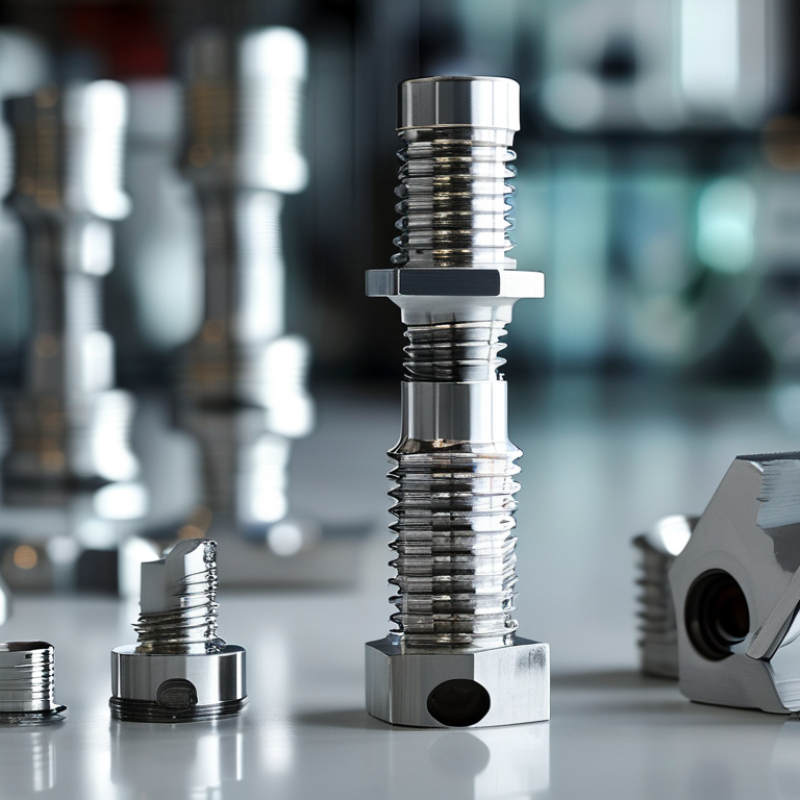
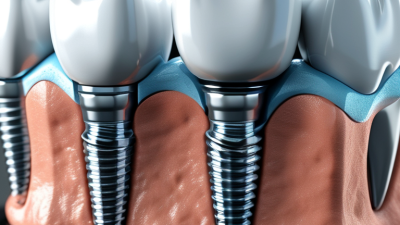
Titanium implants are medical devices placed inside the body to replace or support damaged bone, teeth, or joints. Their value comes from strength, light weight, and strong tissue compatibility. Bone can gradually attach to a carefully prepared titanium surface, a process called osseointegration. This connection helps stabilize dental posts, orthopedic screws, plates, and joint components.
The material is not simply “metal in the body.” Its protective oxide layer resists corrosion and limits unwanted chemical reactions. Implant design, surface texture, manufacturing precision, and sterilization also affect performance. Surgeons and dentists select an implant according to anatomy, bone quality, loading demands, allergies, and the patient’s overall health. Imaging and clinical evidence guide that decision. A polished surface may suit one application, while a textured surface may encourage bone attachment in another.
No implant is perfect. Healing can be delayed by infection, smoking, poor bone density, or excessive mechanical stress. “Permanent” can also be misleading, because an implant may require monitoring or later revision. Reliable manufacturers should provide traceability, material information, quality testing, and documented clinical support. Patients should ask how the implant works, what risks are realistic, and how follow-up care will be managed. Small details matter, and good decisions sometimes require reconsideration.
Evaluating China’s titanium implant manufacturers requires more than comparing prices or polished catalogs. Grand View Research estimates the global dental implants market reached about USD 6.6 billion in 2023. This growth attracts capable factories, but also creates uneven quality. A serious assessment should begin with ISO 13485 certification, product scope, audit dates, and the actual manufacturing site. Certification alone is not enough.
Ask for titanium grade records, such as ASTM F67 or ASTM F136 compliance, together with mill certificates and batch traceability. Review machining tolerances, surface treatment controls, cleaning validation, and packaging integrity. For sterilized products, request sterilization validation and residual testing. ISO 10993 biological evaluation evidence should match the implant’s contact type and duration. Too many buyers accept generic test reports. That is a weak habit.
Clinical evidence deserves closer attention. Request published studies, follow-up periods, sample sizes, and adverse-event reporting, rather than only laboratory photographs. China’s National Medical Products Administration requires applicable registration and technical documentation, so verify registration status through official records. A factory tour can reveal practical details: calibration labels, controlled storage, and operators checking dimensions with gauges. I would also audit complaint handling and recall procedures. These steps take time. They prevent expensive surprises. Market reports provide useful direction, yet they cannot replace an independent quality audit or surgeon feedback.
| No. | Evaluation Dimension | What to Verify | Relevant Standard or Evidence | Suggested Weight | Recommended Benchmark |
|---|---|---|---|---|---|
| 1 | Medical Device Quality Management | Confirm that the production site operates a documented medical-device quality system, including design control, corrective actions, supplier control, and complaint handling. | Valid ISO 13485:2016 certificate issued for the relevant manufacturing site and product scope. | 18% | Certificate is current, site-specific, and covers titanium implants rather than only general machining. |
| 2 | Titanium Material Control | Check material grade, chemical composition, mechanical properties, heat number, supplier certificate, and incoming inspection records. | ASTM F67 for unalloyed titanium and ASTM F136 for wrought Ti-6Al-4V ELI are commonly used implant-material specifications. | 14% | Full lot traceability from raw material certificate to finished implant and shipping record. |
| 3 | Regulatory Registration Capability | Assess whether the supplier can support product registration, technical documentation, labeling, post-market surveillance, and change notifications. | Applicable evidence may include Chinese NMPA registration or filing, market-specific regulatory records, and a controlled technical file. | 12% | Registration status matches the exact product model, material, intended use, and manufacturing site. |
| 4 | Machining and Additive Manufacturing | Review CNC machining, metal additive manufacturing, post-processing, dimensional inspection, and process-validation capability. | Inspect validated work instructions, equipment qualification, calibration records, first-article inspection, and statistical process controls. | 10% | Documented capability for complex geometries, controlled tolerances, and repeatable production batches. |
| 5 | Surface Treatment and Osseointegration | Verify surface roughness, cleaning, passivation, blasting, acid etching, porous coating, and contamination controls. | Require validated process parameters, roughness reports, microscopy or metrology records, and residue or particle testing where applicable. | 10% | Surface specifications are defined in drawings and verified for every qualified production process. |
| 6 | Biocompatibility and Safety Testing | Review biological evaluation, cytotoxicity, sensitization, irritation, chemical characterization, and toxicological risk assessment. | ISO 10993 series, applied according to the implant type, contact duration, and nature of body contact. | 10% | Testing is performed by competent laboratories and relates directly to the final finished and sterilized product. |
| 7 | Mechanical and Functional Validation | Evaluate fatigue strength, static strength, torsion, pull-out, wear, connection integrity, or other tests appropriate to the implant design. | Use the applicable implant-specific ISO or ASTM test method and a documented risk-based validation protocol. | 10% | Pass/fail criteria are predefined, test samples are traceable, and reports identify the exact product configuration. |
| 8 | Sterilization and Packaging | Confirm sterilization method, validation, sterile-barrier integrity, shelf-life testing, and transportation simulation. | ISO 11135 for ethylene oxide, ISO 11137 for radiation sterilization, and ISO 11607 for packaging of terminally sterilized medical devices. | 8% | Sterility assurance level, packaging validation, expiry period, and storage conditions are clearly documented. |
| 9 | Traceability and Change Control | Check unique device identification, serial or lot coding, nonconformance control, recall readiness, engineering changes, and supplier changes. | Review batch records, device history records, risk-management files, change-control procedures, and complaint-response records. | 5% | Every finished device can be linked to raw materials, equipment, operators, inspection results, and release approval. |
| 10 | Commercial Reliability and Support | Compare minimum order quantity, sampling policy, lead time, production capacity, inspection support, technical communication, and after-sales response. | Use signed quotations, approved samples, service-level commitments, capacity evidence, and documented customer-support procedures. | 3% | Commercial terms are transparent, sample quality is consistent with mass production, and technical response times are defined. |
| Total Evaluation Weight | 100% | Select only after document review, sample approval, and quality audit. | |||
Note: The table provides a standards-based evaluation framework without displaying company names or brand-specific information. Certification, registration, testing, and manufacturing claims should be independently verified for each supplier and product model.
China’s Top 10 Titanium Implant Manufacturers should be assessed by evidence, not visibility alone. A serious comparison examines material traceability, clinical experience, machining precision, sterilization control, and post-market service. Titanium grades commonly used for implants include commercially pure titanium and Ti-6Al-4V, covered by standards such as ISO 5832 and ASTM F67/F136.
Market data shows why this sector deserves careful screening. Grand View Research reported that the global dental implants market was valued at over USD 5 billion in 2023, with continued growth expected through the decade. China’s expanding aging population and hospital procurement demand are supporting local production. However, market growth does not prove clinical superiority. That point is often missed.
For a practical Top 10 review, buyers should check whether manufacturers publish mechanical testing, surface-treatment data, and verified clinical follow-up. Coatings, thread design, and roughness affect bone integration, but results depend on surgical technique and patient health. Manufacturing experience matters. So does documentation. NMPA registration, ISO 13485 certification, batch records, and complaint-handling procedures provide stronger evidence than advertising claims. Some suppliers offer impressive prototypes but limited long-term data. Others have reliable factories yet weak international support. The ranking can therefore change by application, region, and evidence quality. Titanium is established, not automatically risk-free.
Material-performance benchmark for titanium grades commonly used in medical implant manufacturing. The chart does not rank individual companies or brands.
ASTM F67 covers unalloyed titanium for surgical implants, while ASTM F136 covers Ti-6Al-4V ELI alloy for surgical implant applications. Values shown are minimum ultimate tensile-strength requirements in megapascals (MPa), not company-specific performance data.
China’s leading titanium implant manufacturers typically serve dental, orthopedic, spinal, and trauma markets. Their product ranges include dental fixtures, bone plates, screws, cages, joint components, and custom surgical parts. A serious comparison starts with product depth, not catalog length. Dental implants often use Grade 4 commercially pure titanium, while load-bearing orthopedic parts may use Ti-6Al-4V ELI. Some facilities also process tantalum or cobalt-chromium, but titanium remains the practical foundation. Small details matter. A porous surface can support bone integration, yet excessive roughness may complicate cleaning and inspection.
Manufacturing capability separates established plants from simple trading offices. Look for five-axis CNC machining, cold forging, laser cutting, additive manufacturing, and controlled heat treatment. A reliable factory should document raw-material certificates, dimensional inspection, surface treatment, and batch traceability. Electron-beam melting or laser powder-bed fusion can create lattice structures for bone-facing areas. However, printed parts still require stress relief, machining, cleaning, and validated sterilization routes. The process is impressive, but not automatically consistent. Experienced technicians may detect burrs around a 0.3-millimeter hole.
For a top-ten evaluation, review ISO 13485 systems, biocompatibility evidence, packaging controls, and complaint-handling records. Ask for sample inspection reports and measurable tolerances. Marketing language can sound precise. It is not proof. Also compare lead times for prototypes, small batches, and regulated production. A manufacturer may excel at standard screws yet struggle with patient-specific geometry. That weakness deserves attention. Transparent communication about rejected batches, tooling limits, and design changes often reveals more than polished product photographs.
When assessing China’s top titanium implant manufacturers, quality systems deserve more attention than ranking lists. Grand View Research estimated the global dental implants market at about USD 4.6 billion in 2023, increasing pressure on suppliers to prove consistency. ISO 13485 certification is a useful starting point. The ISO Survey 2023 recorded more than 30,000 medical-device quality certificates worldwide. Yet certification alone does not guarantee reliable implants. Buyers should verify the certificate scope, production site, audit status, and covered product categories.
Material evidence matters. Request titanium grade records, chemical composition reports, and batch-level mechanical testing. For implantable products, ISO 10993 biological evaluation should address risks such as cytotoxicity, sensitization, and irritation. Surface treatment also needs clear controls. Ask for roughness measurements, cleaning validation, sterilization records, and packaging integrity tests. Small details matter, such as whether the lot number remains readable after sterilization.
Chinese manufacturers serving international buyers should explain compliance with applicable Chinese, European, or United States requirements. Confirm technical files, clinical evidence, labeling, and post-market surveillance procedures. A factory tour can reveal practical weaknesses, including mixed materials, unclear quarantine zones, or incomplete traceability. That experience is often more valuable than a polished brochure. Still, buyer judgment can be imperfect. An impressive audit may overlook supplier changes or process drift. Independent testing and sample approval remain wise safeguards before large orders.