
How to Find China Top Orthopedic Rehabilitation Suppliers?
Finding China’s top Orthopedic Rehabilitation suppliers requires more than comparing product photographs and factory claims. It requires evidence, clinical relevance, and careful verification. The World Health Organization estimates that 2.4 billion people worldwide may benefit from rehabilitation services, showing the sector’s expanding importance (WHO, 2023). China’s aging population adds further demand. The National Bureau of Statistics reported 296.97 million Chinese residents aged 60 or above in 2023, representing 21.1% of the population.
A reliable supplier should demonstrate more than competitive pricing. Buyers should examine NMPA registration, ISO 13485 quality-management certification, production audits, and clear technical specifications. These checks matter for devices such as rehabilitation robots, continuous passive motion machines, gait-training systems, and adjustable orthopedic supports. Look closely at load capacity, control interfaces, patient safety features, maintenance access, and replacement-part availability. A showroom can look impressive. Real performance may depend on calibration, staff training, and after-sales response.
Independent evidence also deserves attention. Clinical evaluations, hospital references, export records, and transparent test reports can reveal whether a supplier serves rehabilitation centers rather than only trading companies. Industry forecasts may offer useful direction, but their market estimates often differ by product definition and research method. That deserves caution. This guide therefore focuses on practical supplier screening, not exaggerated rankings. It considers manufacturing experience, regulatory readiness, customization ability, delivery consistency, and communication after installation. The strongest supplier is not always the largest. It is the one that can prove dependable performance beside a patient’s treatment bed.
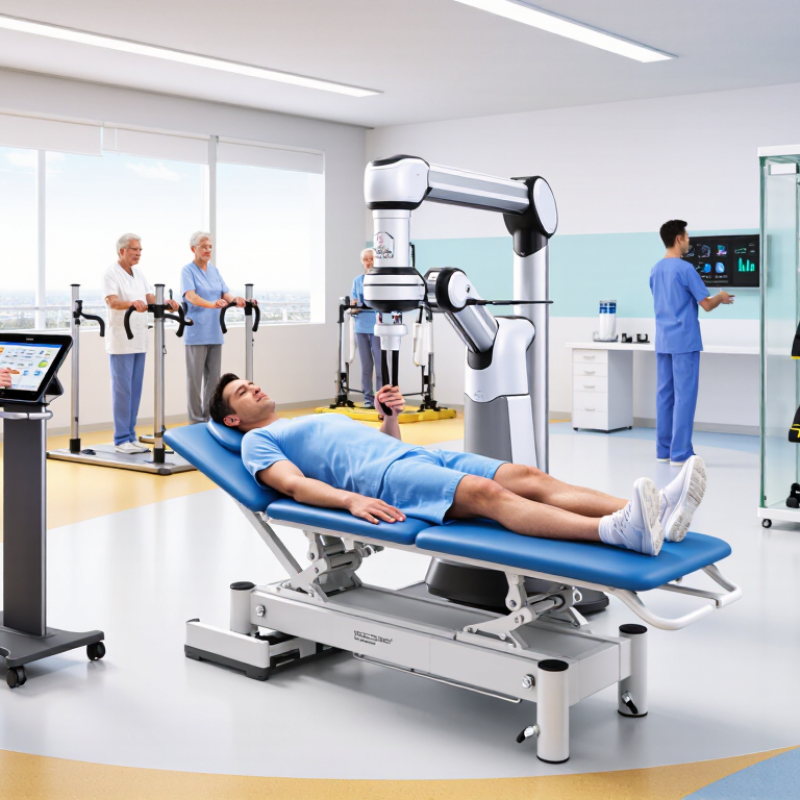
Define Your Orthopedic Rehabilitation Product and Supplier Requirements
Before searching for China’s top orthopedic rehabilitation suppliers, define the product precisely. A knee brace, walking frame, and motorized rehabilitation device require different specifications. Record the intended users, rehabilitation stage, body sizes, materials, adjustment range, load capacity, and cleaning method. Include expected daily use and storage conditions. Small details matter.
My first supplier checklist was too broad. I once focused heavily on price and overlooked fitting instructions. That could create problems for therapists and patients. Now, I request drawings, material information, test reports, packaging details, and sample units. For electronic equipment, I also check operating noise, battery performance, maintenance access, and user safety features. Ask whether customization changes the production process or delivery schedule.
Supplier requirements should match the product’s risk and clinical purpose. Look for documented quality procedures, traceable production records, trained inspection staff, and experience with similar rehabilitation products. Confirm applicable market regulations before placing an order. A factory visit, video audit, or independent inspection can reveal practical issues, such as poor labeling or crowded storage areas. Request a written quotation with minimum order quantity, lead time, payment terms, warranty scope, and replacement procedures. Communication quality deserves attention. If answers remain vague, technical cooperation may become difficult later. A small trial order may cost more initially, but it can expose weaknesses before larger purchasing decisions.
How to Find China Top Orthopedic Rehabilitation Suppliers? - Define Your Orthopedic Rehabilitation Product and Supplier Requirements
| Requirement Dimension | Product or Supplier Requirement | Recommended Specification or Acceptance Criteria | Relevant Evidence to Request | Priority |
|---|---|---|---|---|
| Target Patient and Use Case | Define whether the product is intended for post-operative recovery, mobility assistance, pain management, strength training, or daily-living support. | Specify patient age range, body-size range, contraindications, environment of use, and professional or home-use setting. | Intended-use statement, risk analysis, user profile, clinical or functional evaluation plan. | Critical |
| Product Category | Classify the item as an orthosis, mobility aid, rehabilitation exercise device, electrotherapy device, compression product, or therapy accessory. | Use one clearly defined product category and identify whether the product is reusable, single-use, powered, or non-powered. | Product classification rationale, technical file index, product drawings, model and variant list. | Critical |
| Functional Performance | Set measurable performance requirements for support, range of motion, load, resistance, adjustment, stimulation, or positioning. | Define measurable limits such as adjustment range, maximum user mass, operating time, output range, accuracy, or cycle life according to the product type. | Performance test reports, inspection procedures, calibration records, sample test results. | Critical |
| Materials and Biocompatibility | Control materials that contact intact skin, compromised skin, or the body for prolonged or repeated use. | Identify polymers, metals, foams, textiles, adhesives, coatings, and latex content; evaluate biological safety based on the contact type and duration. | Material declarations, safety data sheets, supplier specifications, and applicable ISO 10993 evaluation or test documentation. | Critical |
| Electrical and Software Safety | For powered or connected equipment, define electrical, battery, charging, alarm, control, and software requirements. | Address electrical safety, essential performance, electromagnetic compatibility, battery protection, cybersecurity where applicable, and software version control. | Electrical safety and EMC test reports, battery documentation, software change records, user instructions, and risk controls. | Critical |
| Applicable Standards and Regulations | Require the supplier to identify the rules applicable to the destination market rather than relying only on general certificates. | Consider ISO 13485 for medical-device quality systems, ISO 14971 for risk management, ISO 10993 for biological evaluation, IEC 60601-1 for applicable medical electrical equipment, and destination-market rules such as EU MDR 2017/745. | Valid certificates, declarations, test reports, technical documentation index, and regulatory registration or authorization evidence where required. | Critical |
| Quality Management | Select a supplier with documented controls for design, purchasing, production, inspection, nonconformity, corrective action, and record retention. | Prefer a current ISO 13485 certificate issued for the relevant legal entity, manufacturing site, and product scope; verify certificate validity independently. | Certificate number and scope, audit summary, process flow, inspection plan, CAPA procedure, traceability records. | Critical |
| Customization Capability | Assess the ability to modify dimensions, materials, colors, packaging, firmware, accessories, and user documentation without weakening compliance controls. | Require documented change control, design review, prototype approval, verification testing, and revision-controlled drawings before mass production. | Engineering change procedure, prototype samples, drawings, bill of materials, validation records, and approval workflow. | High |
| Production Capacity and Lead Time | Confirm whether the facility can support samples, pilot production, recurring orders, and demand fluctuations. | Request separate lead times for sampling, tooling, pilot production, and standard production; define minimum order quantity and monthly capacity in writing. | Capacity plan, production schedule, equipment list, staffing plan, historical on-time delivery data, and contingency plan. | High |
| Incoming and Final Inspection | Establish objective inspection criteria for dimensions, appearance, function, electrical output, packaging, and labeling. | Approve a quality agreement, sampling plan, acceptance limits, inspection equipment, and procedures for handling nonconforming products. | Inspection standard, control plan, calibration certificates, batch records, final inspection report, and certificate of conformity. | Critical |
| Packaging, Labeling, and Instructions | Ensure safe transport, correct identification, traceability, storage, cleaning, operation, warnings, and disposal information. | Define package configuration, label content, lot or serial-number format, language requirements, storage conditions, and user-manual approval process. | Packaging drawings, label proofs, barcode data, multilingual instructions, transport test records, and artwork change control. | High |
| After-Sales and Technical Support | Define support for installation, training, troubleshooting, spare parts, repairs, complaints, and field safety actions. | Set response times, warranty terms, spare-parts availability period, repair turnaround, escalation contacts, and complaint-handling responsibilities. | Warranty policy, service manual, spare-parts list, training materials, complaint procedure, and service-level agreement. | High |
| Commercial and Supply-Chain Terms | Compare total landed cost and supply risk rather than unit price alone. | Document currency, payment terms, tooling ownership, delivery terms under Incoterms, minimum order quantity, price validity, and raw-material substitution controls. | Formal quotation, proforma invoice, supply agreement, approved supplier list, material traceability, and business-continuity plan. | High |
| Supplier Verification | Verify that the quoted supplier is the actual manufacturer or an authorized production partner for the stated product. | Cross-check the legal entity, manufacturing address, certificate scope, production site, bank details, and product documentation before placing an order. | Business registration information, factory audit report, video or on-site audit, certificate verification, sample review, and reference project evidence. | Critical |
Related Posts
-

What Is Minimally Invasive Surgery and How Does It Work?
-

Top 10 Benefits of Minimally Invasive Surgery in China
-

Top 10 Bone Plates in China for Global Buyers Seeking Quality?
-

Top 10 Benefits of Titanium Implants in China?
-

Why Choose Bone Screws for Your Medical Supply Needs?
-

10 Best Tips for Managing Orthopedic Trauma Effectively