China Best Orthopedic Trauma Implant Manufacturers?
Choosing among China’s best orthopedic trauma implant manufacturers requires more than comparing prices or polished catalogs. It demands careful attention to clinical experience, engineering discipline, and documented quality systems. Orthopedic Trauma implants must perform under pressure, from a tibial plate supporting early mobility to a spinal screw exposed to repeated loading. Reliable manufacturers usually provide material specifications, dimensional inspection records, sterilization information, and traceability for each production batch.
A credible supplier should demonstrate experience with stainless steel, titanium alloy, locking plates, intramedullary nails, and external fixation systems. Certifications matter, but they do not replace technical judgment. Buyers should review regulatory approvals, manufacturing audits, surgeon feedback, complaint handling, and post-market monitoring. Details reveal much: clean machining edges, consistent screw threads, secure packaging, and clear instructions for use. Small defects can become serious concerns.
Not every impressive factory is the right partner.
Communication also deserves scrutiny. Can the manufacturer explain fatigue testing without vague claims? Can it respond clearly when a product requires redesign? These questions expose practical reliability. Some suppliers may offer strong customization, yet lack sufficient clinical evidence for every new configuration. That limitation should be acknowledged, not hidden. A thoughtful evaluation therefore balances production capacity, research investment, quality assurance, export experience, and patient safety responsibilities. This guide examines leading Chinese manufacturers through that balanced lens, helping distributors, hospitals, and orthopedic professionals make informed decisions based on evidence rather than marketing language.
Orthopedic Trauma Implant Manufacturing in China: An Industry Overview
China’s orthopedic trauma implant manufacturing sector is expanding with hospital demand, export capacity, and engineering investment.
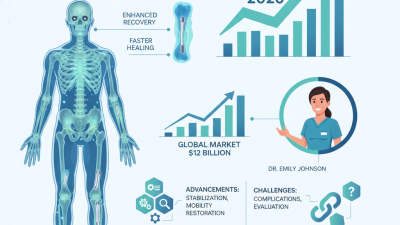
Fortune Business Insights estimated the global orthopedic trauma devices market at approximately USD 8.2 billion in 2023. Its forecast indicates continued growth through 2030. Grand View Research also identifies Asia-Pacific as a major growth region for orthopedic implants. China remains important, but market size alone does not prove manufacturing quality.
Factories typically produce plates, screws, intramedullary nails, and external fixation components. Common materials include titanium alloys, stainless steel, and cobalt-chromium alloys.
CNC machining creates screw threads with controlled geometry. Laser marking supports traceability on small implants. Surface finishing needs careful inspection, especially around holes and locking interfaces. Small defects can affect surgical handling.
Reliable manufacturers usually operate under ISO 13485 quality systems and follow applicable NMPA requirements. Testing may include fatigue, torsion, pull-out strength, corrosion resistance, and dimensional verification. ASTM and ISO standards provide useful technical references.
Yet certification is not the whole story. Buyers should review batch records, sterilization controls, complaint handling, and supplier audits.
Some public factory claims remain difficult to verify. That deserves caution.
A practical assessment should include sample inspection, technical file review, and communication with orthopedic surgeons. Product consistency matters more than polished brochures.
Quality Standards and Regulatory Requirements for Trauma Implants
China Best Orthopedic Trauma Implant Manufacturers?
Quality Standards and Regulatory Requirements for Trauma Implants
Selecting a trauma implant manufacturer requires more than comparing prices or product catalogs. Reliable suppliers should operate under ISO 13485 quality management systems. Their processes must cover design control, supplier evaluation, production, and post-market surveillance. Risk management should follow ISO 14971 principles. Biocompatibility testing commonly references ISO 10993. Sterile products also need validated sterilization and packaging processes. A clean package seal matters when implants reach the operating room.
Regulatory approval depends on the target market. In China, manufacturers must meet applicable National Medical Products Administration requirements. Exported products may also need registration, technical files, clinical evidence, and local conformity assessments. Ask for traceability from raw material certificates to final lot records. Titanium composition, surface treatment, mechanical strength, and fatigue performance should be verified. Radiographic visibility and instrument compatibility deserve practical review. A certificate alone is not proof of consistent quality. That point is easy to overlook.
Tips: Request recent audit reports, test summaries, sterilization validation, and complaint-handling records. Check whether production lots can be traced quickly. Review samples with surgeons and quality engineers, not only purchasing staff. Factory visits are useful, but they can create false confidence if documentation is weak. A strong supplier should explain failures openly and show corrective actions. No evaluation is perfect; requirements can change, and even experienced teams may miss a small packaging defect.
How to Evaluate China’s Leading Orthopedic Trauma Implant Manufacturers
Evaluating China’s leading orthopedic trauma implant manufacturers requires more than comparing unit prices. The Global Burden of Disease Study 2019 estimated 178 million people were living with fractures worldwide. That burden makes traceability, mechanical evidence, and clinical fit more important than catalogue breadth. Ask for implant-specific test reports, not general certificates. Check fatigue, torsion, pull-out, corrosion, and sterilization validation. A polished brochure is not evidence.
Regulatory maturity is a practical filter. China’s NMPA requires registration, quality-system controls, and post-market surveillance for relevant implants. Review the registration certificate, manufacturing address, product scope, and renewal status directly. ISO 13485 certification helps, but it does not replace product-specific surveillance. The World Health Organization reports that about one in ten patients experiences harm during healthcare. Ask how complaints are coded, investigated, and closed. Then sample batch records, packaging seals, and lot labels.
Commercial diligence matters too. Compare delivery performance, nonconformity rates, recall history, and training support across three years. Request audited figures, not promises. Examine whether engineers can adapt instruments for narrow canals, poor bone quality, or unusual fracture patterns. Cost savings may disappear through revisions, delays, or incompatible trays. Export volume is useful evidence, but incomplete. Independent surgeon feedback and published follow-up data should carry greater weight. My own bias is price-focused evaluation; that approach needs correction.
Comparing Suppliers by Materials, Customization, and Clinical Support
Choosing among China’s orthopedic trauma implant manufacturers requires more than comparing prices. Material selection should match anatomy, load, corrosion resistance, and surgical technique. Titanium alloys are lightweight and generally compatible with imaging. Stainless steel can offer strength and cost efficiency. Cobalt-chromium may suit demanding mechanical applications, but its use requires careful clinical justification. Ask for material certificates, mechanical test results, surface-treatment records, and batch traceability.
Customization shows a supplier’s engineering maturity. Reliable teams can convert surgeon feedback into controlled CAD revisions, trial components, and documented approvals. Useful details include screw-angle tolerances, plate contouring limits, instrument compatibility, and packaging requirements. Patient-specific solutions may help unusual fractures, yet customization can increase validation time and manufacturing risk. Do not accept attractive prototypes without dimensional inspection and simulated-use testing. Small errors matter.
Clinical support often separates a capable manufacturer from a convenient one. Look for surgical training, instrument-set planning, clear instructions, multilingual technical communication, and rapid responses during difficult cases. Strong suppliers also maintain complaint handling, post-market surveillance, and stable replacement procedures. Request evidence rather than promises. A polished presentation is not clinical evidence. No supplier is perfect. Even experienced teams may miss a surgeon’s practical concern, especially when feedback travels through several departments. An on-site or video-based technical review can reveal these gaps before procurement. Evaluate documentation, communication, and follow-up together.
China Best Orthopedic Trauma Implant Manufacturers? Comparing Suppliers by Materials, Customization, and Clinical Support
Material benchmark comparison based on minimum mechanical-property requirements commonly referenced in ASTM implant-material standards. Supplier customization capability and clinical support should be verified through technical documentation, quality certifications, validation records, and post-market evidence.
Reference standards: ASTM F136 for Ti-6Al-4V ELI, ASTM F138 for wrought 316L stainless steel, and ASTM F75 for cast cobalt-chromium-molybdenum alloy. Values shown are minimum specified tensile and yield strength requirements in MPa; actual product performance depends on processing, geometry, surface treatment, sterilization, and validation.