
High order volumes may cause minor processing delays

Search

Top 10 Red Light Therapy Devices for Face Global Buyers

Choosing the right light therapy device can feel surprisingly complicated. Global buyers face different prices, shipping rules, warranties, and product claims. This guide examines the Top 10 Red Light Therapy Devices for Face Global Buyers through practical, evidence-aware criteria. It considers wavelength ranges, irradiance, treatment coverage, comfort, controls, and manufacturer transparency. Small details matter. A flexible mask may rest differently on a narrow face. A tabletop panel may cover the neck more effectively.

Red Face Light Therapy is often discussed for supporting skin appearance, including concerns such as uneven tone, fine lines, and texture. However, results can vary with device design, treatment consistency, skin type, and individual expectations. No device guarantees the same outcome for every user. That deserves attention.

Each selection is assessed from a buyer’s perspective, not only through polished marketing language. We look for published specifications, realistic usage instructions, eye-safety guidance, and accessible customer support. Independent testing or clear certification information can strengthen confidence, but labels should still be checked carefully in the buyer’s country. Availability changes. So do regional standards.

The ranking is not a permanent verdict. It is a practical starting point for comparison. Some devices may offer impressive coverage but feel heavy after several minutes. Others may be comfortable yet provide limited treatment areas. Reviews can reveal these everyday weaknesses. Still, user feedback is not controlled clinical evidence. Buyers should consult a qualified healthcare professional when they have photosensitivity, eye conditions, or use light-sensitive medication.
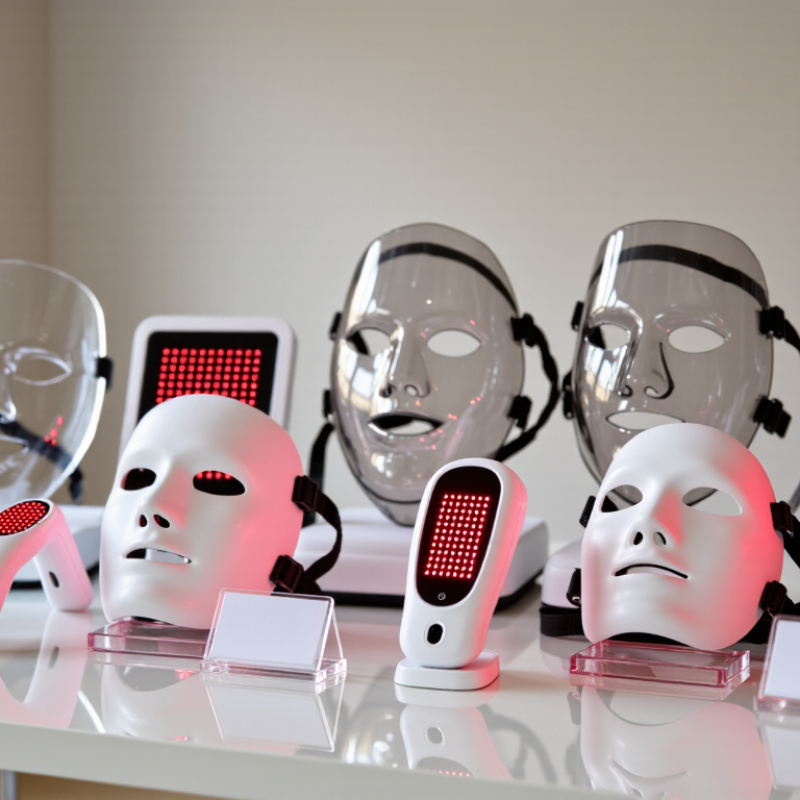
Top 10 Red Light Therapy Devices for Face Global Buyers

What Red Light Therapy Does for Facial Skin

Top 10 Red Light Therapy Devices for Face Global Buyers

What Red Light Therapy Does for Facial Skin

Red light therapy uses low-energy red or near-infrared light, commonly around 630–660 and 810–850 nanometres. These wavelengths may support cellular energy production and encourage fibroblast activity. Fibroblasts help produce collagen and elastin, which influence firmness and texture.

The evidence is promising, not magical. A randomized split-face study of 76 participants reported a 36% reduction in wrinkle severity and a 19% improvement in skin elasticity after LED treatment. The results appeared in Photomedicine and Laser Surgery in 2007. However, treatment schedules, light intensity, and skin conditions varied between studies. That makes direct device comparisons difficult.

Some users notice softer skin and reduced dullness after several weeks. Fine lines may look less sharp under consistent lighting. A 2023 review of photobiomodulation research also described potential benefits for inflammation, wound repair, and collagen-related changes. Still, home devices usually deliver less controlled energy than clinical systems. Results can be modest. Mine would not be judged from one mirror check.

For global buyers, check the wavelength range, irradiance, treatment time, eye protection, and published safety testing. A device should not promise to erase wrinkles or treat every skin problem. People using photosensitising medicines, or managing a skin condition, should seek professional advice before treatment. Photobiomodulation remains an evolving field, and stronger long-term trials are still needed.

Top 10 Red Light Therapy Devices for Face: What Red Light Therapy Does for Facial Skin

This chart shows representative wavelengths commonly used in facial photobiomodulation research. Red light, generally around 630–660 nm, is studied for supporting skin appearance, collagen-related activity, and the visible signs of photoaging. Near-infrared light, commonly around 810–850 nm, penetrates more deeply and is studied for cellular energy support and inflammation-related responses. Wavelength alone does not determine device performance; treatment dose, irradiance, exposure time, coverage, and eye protection are also important.

How to Compare Facial Red Light Therapy Devices

How to Compare Facial Red Light Therapy Devices

A practical comparison starts with the light, not the packaging. Check the stated wavelengths, usually red and near-infrared ranges, and confirm whether measurements come from independent testing. Irradiance matters because it describes power reaching the skin. Higher is not automatically better. Ask for dose guidance in joules per square centimetre.

Fit changes real-world use. A mask should rest evenly across the forehead, cheeks, and chin without pressing the nose. A handheld panel needs steady positioning, which can become tiring after several minutes. I prefer clear treatment timers and simple controls. Small details matter.

Check eye protection instructions carefully. Review electrical safety marks, user manuals, cleaning guidance, and the return policy. Transparent sellers should explain testing methods, warranty length, and expected treatment schedules. Be cautious when clinical language sounds stronger than the supporting evidence. Photos alone prove very little.

Skin response also deserves attention. Patch testing can reveal irritation before a full session. Users with photosensitive conditions or relevant medication should ask a qualified healthcare professional before use. Keep a short log of session time, distance, redness, and comfort. The record may expose inconsistent habits. My own comparison framework would still have gaps, especially when manufacturers report different testing conditions. That is why comparable measurements are more useful than impressive claims.

Top 10 Red Light Therapy Devices for Global Buyers

Global buyers now compare more than appearance when choosing among the top 10 red light therapy devices for the face. Market reports differ, but Grand View Research estimated the global LED light therapy market at approximately US$1.1 billion in 2023. This growth reflects wider home-use interest, not guaranteed clinical results. A 2024 review in the Journal of Clinical Medicine reported potential improvements in wrinkles and skin texture, while noting inconsistent treatment doses and study methods.

For international shoppers, wavelength and irradiance deserve close attention. Many facial devices use red light near 630–660 nanometres, while some add near-infrared light around 810–850 nanometres. Buyers should request measured irradiance, treatment time, and fluence data. Marketing language is often vague. It should not be. Look for independent safety testing, clear user instructions, appropriate eye protection, and electrical certifications accepted in the destination country. Voltage compatibility also matters when travelling. A comfortable mask may still be poorly designed if it heats the skin or presses around the nose.

Tips: Start with short sessions and follow the manual. Photograph your skin under similar lighting. Changes can be subtle. Stop if irritation persists, and seek professional advice for photosensitive conditions or medication-related sensitivity. No device fits every skin type, and this is where many comparison articles oversimplify the decision.

Safety, Treatment Methods, and Expected Results

Top 10 Red Light Therapy Devices for Face Global Buyers

Safety should guide every purchase. Choose a device with clear wavelength information, usage instructions, and electrical certifications for your market. Red light commonly targets the skin surface, while near-infrared light reaches deeper tissue. Neither should feel painfully hot. Stop treatment if you notice burning, swelling, persistent redness, or eye discomfort. Use the recommended eye protection, especially with bright panels. People taking light-sensitive medicines or managing skin conditions should ask a qualified healthcare professional before use.

Treatment methods vary between masks, panels, and handheld tools. Clean and dry your face before each session. Keep the device at the stated distance and follow its timer. Many home routines use short sessions several times weekly, but more exposure is not automatically better. A practical approach is to photograph your skin under similar lighting every few weeks. That detail matters. Memory can exaggerate small changes. My less-perfect observation is that inconsistent routines often explain disappointing results better than the device itself.

Expected results are usually gradual. Some users report improved skin comfort or brightness after several weeks. Fine-line or texture changes may require eight to twelve weeks of consistent use. Results depend on age, pigmentation, sleep, skincare habits, and device output. Red light therapy is not a guaranteed acne, scar, or wrinkle cure. Avoid products promising instant transformation. A reliable buyer also checks return policies, dosage guidance, warranty terms, and independent safety information before ordering internationally.

Choosing the Best Device for Different Skin Needs

Choosing the best red light therapy device starts with your skin goal, not its appearance. For fine lines and dullness, look for red wavelengths around 630–660 nanometers. Near-infrared light, commonly 810–850 nanometers, may support deeper tissue comfort and firmness. Results depend on consistent use, realistic expectations, and suitable light output.

For acne-prone skin, choose a device with clear safety instructions and avoid models that create excessive heat. Red light may calm visible redness, but it does not replace proven acne treatment. Sensitive users should begin with short sessions, perhaps five minutes, and observe their skin for 24 hours. Dry skin may tolerate a gentle mask, while oily skin often benefits from easy-to-clean surfaces. Keep the device at its stated distance. Closer is not always better.

Check irradiance, session timing, eye protection, warranty terms, and electrical compatibility before buying internationally. Independent testing or clearly published technical data adds credibility. A dermatologist can help when you use photosensitizing medication or manage persistent pigmentation. I would not select a device based only on “professional strength” claims. Marketing language can hide missing measurements. My own buying preference would favor clear instructions over impressive design, although even careful choices can disappoint when routines are inconsistent. Faces respond differently, and visible change may take several weeks. Photographing the same area under similar light can reveal progress more honestly.

Top 10 Red Light Therapy Devices for Face Global Buyers - Choosing the Best Device for Different Skin Needs

A practical comparison of representative face-device configurations based on commonly published photobiomodulation specifications

Rank Device Configuration Recommended Skin Need Light Wavelengths Typical Irradiance at Skin Suggested Energy Dose Coverage / Fit Typical Session Key Buying Consideration
1 Flexible Full-Face LED Mask Fine lines, uneven tone and general maintenance Red 630–660 nm; near-infrared 810–850 nm 20–40 mW/cm² Approximately 6–12 J/cm² per session Full face; flexible silicone or fabric construction 5–15 minutes Choose adjustable straps, eye protection and uniform light distribution around the nose and cheeks.
2 Rigid Contoured LED Mask Regular anti-aging routines and broad facial coverage Red 630–660 nm; near-infrared 830–850 nm 15–35 mW/cm² Approximately 5–10 J/cm² per session Full face; fixed molded shell 10–20 minutes A stable distance from the skin can improve consistency, but comfort and fit vary by face shape.
3 Red and Near-Infrared Light Panel Face, neck and décolletage; users wanting a larger treatment area Red 630–660 nm; near-infrared 810–850 nm 25–60 mW/cm² Approximately 5–12 J/cm² per session Large area; requires a consistent seating distance 5–15 minutes Look for a measured irradiance chart at the intended treatment distance and a timer with automatic shutoff.
4 Compact Handheld Red-Light Wand Localized fine lines, small blemishes and targeted areas Red 630–660 nm; optional near-infrared 810–850 nm 10–40 mW/cm² Approximately 3–10 J/cm² per area Small treatment head; limited coverage 3–10 minutes per area Useful for precision work, but larger areas take longer and require even movement or repeated positioning.
5 Blue-and-Red LED Acne Mask Mild to moderate acne-prone skin and post-blemish maintenance Blue 405– blue 430 nm; red 630–660 nm 10–30 mW/cm² total, depending on mode Follow the device-specific dose; avoid combining modes without instructions Full face; mask-based coverage 5–15 minutes Blue light may increase photosensitivity concerns; use eye protection and follow safety guidance carefully.
6 Red-Light Neck and Face Panel Fine lines on the jawline, neck and upper chest Red 630–660 nm; near-infrared 810–850 nm 20–50 mW/cm² Approximately 6–12 J/cm² per session Medium-to-large area; stand-mounted or wall-mounted 5–15 minutes Confirm that the panel delivers comparable output at the lower neck and not only at its center.
7 Low-Irradiance Sensitive-Skin Mask Users prioritizing a gentler routine and gradual introduction Red 630–660 nm; near-infrared 810–850 nm 8–20 mW/cm² Approximately 2–8 J/cm² per session Full face; lightweight flexible fit 10–20 minutes Useful when heat or brightness is uncomfortable; start with shorter sessions and monitor skin response.
8 Travel LED Mask with Rechargeable Battery Portable maintenance routines and frequent travelers Red 630–660 nm; optional near-infrared 810–850 nm 10–30 mW/cm² Approximately 4–10 J/cm² per session Full face; cordless and foldable 10–15 minutes Check battery capacity, charging standards, travel-lock features and whether output remains stable on battery power.
9 Multi-Mode Facial LED Device Users with changing concerns such as tone, texture and occasional blemishes Red 630–660 nm; near-infrared 810–850 nm; optional blue 405–430 nm 10–35 mW/cm² Mode-dependent; commonly approximately 3–10 J/cm² Full face; electronic mode selection 5–15 minutes Independent controls for each wavelength are preferable to vague “combined light” settings.
10 Small Spot-Treatment LED Applicator Targeted areas around the mouth, forehead or individual blemishes Red 630–660 nm; optional blue 405–430 nm 15–50 mW/cm² Approximately 3–10 J/cm² per spot Very small area; contact or near-contact applicator 2–8 minutes per spot Best for precision rather than speed; ensure the treatment head can be cleaned without damaging the LEDs.
Buyer’s note: Irradiance and dose values are representative ranges commonly used in consumer photobiomodulation devices, not guaranteed specifications for every product. Actual results depend on wavelength accuracy, treatment distance, dose, consistency and individual skin response. Buyers should verify independent measurements, electrical safety certification, warranty coverage, eye-safety instructions and contraindications before purchase.
Back to Top
Product has been added to your cart