High order volumes may cause minor processing delays

Search

Top 10 Types of Bone Screws for Global Buyers

Bone screws may look simple on a surgical tray, but their design affects how surgeons secure fractures, join bone segments, and support healing. Diameter, thread shape, length, and material all matter. So does the patient’s bone quality. A screw that works well in dense cortical bone may perform differently in softer cancellous bone.

This guide compares ten common types of Bone Screws for global buyers, including cortical, cancellous, cannulated, locking, and headless designs. It focuses on practical selection factors: intended use, available sizes, material options, instrumentation, traceability, and supplier documentation. These details help procurement teams ask better questions. They do not replace clinical judgment or product-specific instructions.

Orthopedic trauma surgeon Dr. Mark R. Brinker is a recognized voice in fracture care. To avoid putting unverified words in his mouth, the following is an editorial principle, not a verbatim quotation: “A screw must suit the bone, the fracture, and the fixation plan.” That distinction matters. A product catalogue can show dimensions and materials, yet real-world performance also depends on placement and surgical technique. A ranking cannot settle every case. Buyers should verify specifications, quality records, and intended indications directly with manufacturers, then consult qualified clinicians where clinical choices are involved. Even a detailed comparison leaves room for questions. Good sourcing starts there.
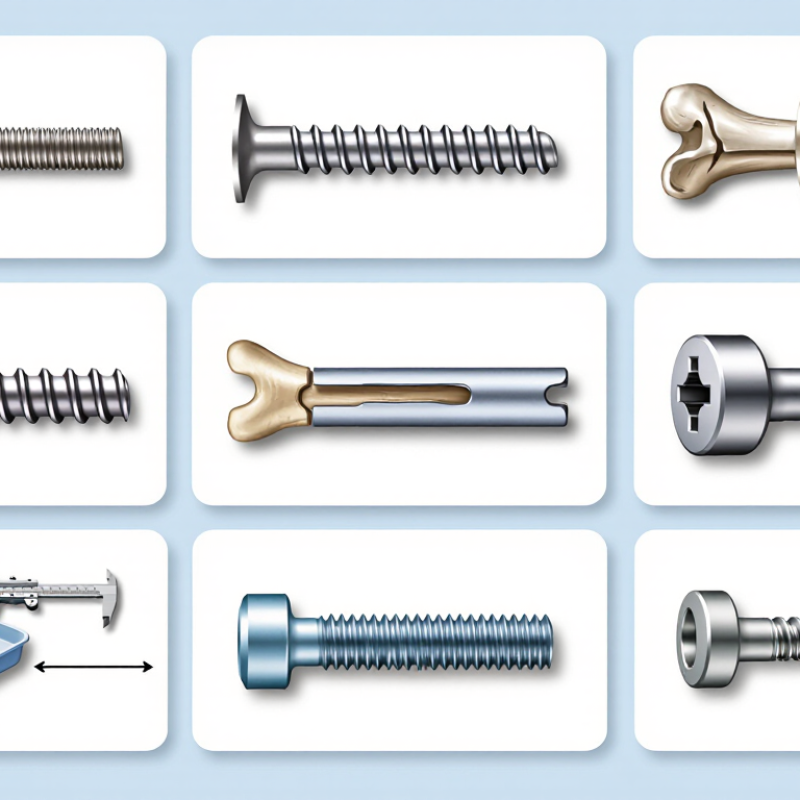
Top 10 Types of Bone Screws for Global Buyers

How Bone Screws Are Classified by Design and Function

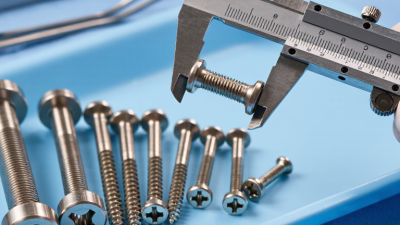
Bone screws are best classified by what they do, where they sit, and how they engage bone. A cortical screw has tighter threads for dense outer bone; a cancellous screw uses deeper threads for softer, spongier regions. Lag screws compress a fracture as the smooth near-shaft slides while distal threads grip the far fragment. Locking screws thread into a plate, creating a fixed-angle construct; standard screws press the plate against bone. Small details matter. Thread pitch, core diameter, and head shape affect purchase, compression, and load transfer.

Function adds another useful layer: cannulated screws guide over a wire, while self-tapping tips cut their own paths. Some designs are headless, useful when a prominent head could irritate nearby soft tissue. Bioabsorbable options avoid permanent metal, but their strength and degradation profile need case-specific review. Classification is not perfectly tidy; one screw may be cannulated, partially threaded, and designed to compress. That is worth remembering. The World Health Organization’s 2022 Global report on musculoskeletal health estimates that 1.71 billion people live with musculoskeletal conditions. This broad figure indicates health burden, not demand for any screw type. Under U.S. regulation 21 CFR 888.3040, bone fixation screws and washers are Class II devices. That category does not replace clinical selection.

Core Features That Distinguish the Main Bone Screw Types

Bone screws differ by thread shape, shaft design, and how they engage bone or a plate. Cortical screws have finer threads for dense bone, while cancellous screws use deeper threads suited to softer bone. A small pitch difference matters. Lag screws compress a fracture as they tighten; partially threaded designs can create this effect when the smooth shaft crosses the fracture line. Fully threaded screws generally provide fixation without the same sliding action.

Other features address access and construct stability. Cannulated screws have a hollow center, allowing placement over a guidewire, which can help with precise positioning. Locking screws attach to compatible plates through threaded heads, creating a fixed-angle connection rather than relying only on plate-to-bone pressure. Self-tapping screws cut threads as they advance; self-drilling types also form a path at the tip, though bone quality and surgical technique affect their use. Bioabsorbable screws gradually break down, but their strength and absorption profile differ by material. Not interchangeable. For buyers, compare diameter, length, thread coverage, material, and instrument compatibility against the intended procedure and verified product documentation. A specification sheet can still leave questions; confirm details with qualified clinical and procurement teams.

Top 10 Types of Bone Screws: Core Features

A value of 1 indicates a feature commonly associated with that screw type; 0 means it is not a defining feature. Screw designs can overlap, and features or materials vary by design and application. This is a qualitative comparison, not a measure of clinical performance.

Ten Common Bone Screw Types and Their Typical Applications

Bone screws serve different jobs, and the right choice depends on bone quality, fracture pattern, and fixation plan. Cortical screws anchor in dense shafts; cancellous screws suit softer bone near joint ends. Locking screws connect firmly to a plate. Lag screws compress fracture surfaces. Cannulated screws follow a guidewire. Compression screws create interfragmentary pressure. Headless screws sit below joint surfaces. Herbert screws use different thread pitches for compression. Bioabsorbable screws may suit selected small fragments. Pedicle screws stabilize spinal constructs.

These categories can overlap: a cannulated screw may also be headless or generate compression. Not interchangeable. The Global Burden of Disease 2019 study, published in The Lancet Healthy Longevity, estimated 178 million new fractures worldwide that year. That figure describes fracture incidence, not screw demand. For global purchasing, compare diameter, length, thread design, material, and compatible instruments. Confirm the intended anatomy and fixation technique with qualified clinical teams.

Tips: Check product specifications against the surgical plan. A few millimeters matter near a joint. Don’t assume similar-looking screws perform alike.

Top 10 Types of Bone Screws for Global Buyers - Ten Common Bone Screw Types and Their Typical Applications

Bone Screw Type Typical Design Features Common Applications Typical Use Context Key Selection Considerations
Cortical screw Usually has a relatively fine thread with a smaller thread depth, intended to engage dense cortical bone. Fixation of plates and small fragments in bones with substantial cortical bone. Common in fracture fixation, including fixation involving the shaft of long bones. Diameter, length, thread engagement, plate compatibility, and the quality and thickness of the available cortex.
Cancellous screw Typically has a coarser, deeper thread designed to gain purchase in less dense cancellous bone. Fixation in metaphyseal or epiphyseal bone and other areas with a significant cancellous component. Used in selected fracture fixation procedures around joints and in other cancellous-bone regions. Thread length, screw diameter, bone quality, and whether the intended construct requires compression.
Locking screw Head engages a threaded hole in a compatible plate, creating a fixed-angle connection between screw and plate. Plate fixation where angular stability is useful, including some comminuted fractures. May be used in constructs for osteoporotic bone or fractures with limited bone-fragment support, as clinically indicated. Must match the plate system; assess intended screw trajectory, plate position, and the need for fixed-angle fixation.
Cannulated screw Contains a central channel so it can be advanced over a guide wire. Accurate fixation of selected fractures, including some fractures of the femoral neck, scaphoid, and other small or deep bones. Useful when image-guided positioning and controlled placement along a planned trajectory are important. Guide-wire placement, outer diameter, length, cannulation size, and the need to avoid joint penetration.
Lag screw Designed to compress two bone fragments; commonly achieved by allowing the screw to glide in the near fragment while its threads engage the far fragment. Interfragmentary compression for suitable fractures with a fracture line and geometry that permit compression. Can be placed independently or through a plate, depending on the fracture and fixation plan. Fracture orientation, screw trajectory, glide-hole technique when required, and the amount of compression applied.
Headless compression screw Has no prominent external head and commonly uses a differential thread design to generate compression as it is inserted. Selected fractures and fusions in small bones, including some scaphoid fractures and procedures in the foot or hand. Often considered where a low-profile implant is desirable near a joint or beneath a cartilage surface. Screw length, compression design, entry point, countersinking depth, and the risk of joint-surface prominence.
Fully threaded screw Threads extend along most or all of the shaft, providing thread purchase across the intended bone segment. Neutral fixation, plate attachment, or other applications where compression is not intended from a partially threaded design. May be used in a lag technique if a separate glide hole is prepared in the near fragment. Thread engagement, planned fixation mode, bone quality, and compatibility with the plate or implant.
Partially threaded screw Has a threaded portion near the tip and a smooth shank near the head; the unthreaded portion can allow the near fragment to glide. Compression across selected fractures when the thread length and fracture configuration are appropriate. Used in some fracture-fixation procedures where the far fragment is intended to be engaged while the near fragment is drawn toward it. Thread length must suit the bone and fracture; threads crossing both fragments may prevent the intended compression.
Malleolar screw A screw selected and sized for fixation of malleolar fractures; may be partially or fully threaded depending on the technique and device design. Fixation of selected medial or lateral malleolar fractures of the ankle. Used as part of an ankle-fracture fixation plan, sometimes with a washer or other fixation components. Fracture pattern, bone size, trajectory, joint alignment, and protection of nearby structures.
Bioabsorbable screw Made from a bioabsorbable polymer or other resorbable material; mechanical properties and resorption profiles vary by material. Selected fixation procedures, including some ligament or osteochondral procedures and small-fragment applications. May be considered when a resorbable implant is appropriate; it is not interchangeable with a metallic screw in every indication. Material-specific strength, resorption behavior, indication, local tissue response, and the surgeon’s fixation requirements.

How Anatomy and Fixation Goals Shape Screw Selection

Bone-screw selection begins with the bone, not the catalogue. A dense cortical shaft can support different purchase than a thin metaphyseal shell. Thread depth, diameter, and length must match the available bone and the intended fixation. Small details matter. Compression screws can draw fragments together; locking screws connect to a plate and may help maintain alignment when bone purchase is limited. Cannulated designs can follow a guidewire, but accurate placement still depends on imaging and surgical technique.

The fixation goal also matters. A simple fracture may call for controlled compression, while a fragile or multi-fragment area may need a construct that resists bending and rotation. The Global Burden of Disease Study 2019, reported in Lancet Healthy Longevity, estimated 178 million new fractures worldwide that year and 455 million people living with fracture-related acute or long-term effects. That burden spans very different anatomies and care settings. For global buyers, clear specifications for material, dimensions, thread design, and compatibility help reduce selection errors. There is no universal winner. Even familiar rules can mislead when bone quality, fracture pattern, or surgical approach changes. The final choice belongs to the treating team.

What Global Buyers Should Check in Bone Screw Specifications and Compliance

For global buyers, a bone screw’s name is not a specification. Check alloy, diameter, thread pitch, length, head geometry, drive type, and intended bone site. ASTM F543-23 describes four mechanical test methods for metallic bone screws: torsional properties, driving torque, pullout strength, and self-tapping performance. Ask for test results tied to the exact design and material, not a generic product family. Small details matter. A 1 mm length difference can affect surgical fit.

Confirm the applicable dimensional standard, such as ISO 5835 for specified metal bone screws, and verify that drawings match the supplied sample. Request material certificates, sterilization validation, packaging shelf-life evidence, and lot-level traceability. FDA’s Quality Management System Regulation, effective February 2, 2026, incorporates ISO 13485:2016 by reference; buyers should check market-specific registration and quality-system evidence. Requirements vary by destination. A certificate alone is not proof that every configuration is covered. ASTM F543 is useful, but it does not replace biological evaluation under the ISO 10993 series or clinical and regulatory review. It is easy to overlook that gap. Compare the device’s intended use, labeling, and test reports before approving a supplier.

Back to Top
Product has been added to your cart